
A couple of different companies offer preconfigured DIY solar kits for whatever size system you’d like to build. We even offer these. However, it’s important to realize that these are not ideal for most customers. As it turns out, they are rarely exactly what you need. This is very important when building something that is not just powering your home, it’s also a hefty investment.
What About Hiring an Installer?
I want to make clear that this article is not your typical solar company trying to convince you to hire them. This is an objective look at ways you could get your own equipment and install it yourself. There are many benefits to hiring an installer, but you also end up paying a lot more. Typically installation adds 40-50% to the overall project cost. That’s ultimately a decision for you to make for yourself.
Solar is not One Size Fits All
If you’re researching this on your own, you could probably figure out the correct size system you need (More or Less). However, it might not be the best configuration of parts for your house. Sometimes customers come to us after purchasing a kit and are completely lost. Whether they’ve pointed their panels in the wrong direction, or caused damage to their roof. Sometimes people are just so intimidated that they don’t even try to install them. This means that they don’t ever start generating power. That’s a pretty big waste.
So, the best solution to this is to get help from an experienced solar installer while installing your solar panels, but how practical is that? Well, you could just call up an experienced installer, but they might just tell you to hire them to install it for you. Many sales companies will offer a little bit of guidance, but they aren’t going to hold your hand the entire way.
Talk to an Expert: A Better Way
If you’re looking for a company to help you through this new challenge, we will do that for you. We’ve got over 10 years of experience in helping people make solar work on their property. Most companies will help you plan everything out, but we will walk you through every step of the process so you can install with confidence.
Hire an Electrician for Permits
Many people run into issues with permits and issues with the utility company if they do it on their own. Most states though, will allow you to build your own solar array, but you have to get a qualified electrician to sign off on it. Companies like us will actually do this for you. This means that you get access to all of our installation knowledge and expertise without having to pay for one of us to come out to the job site. This usually saves tens of thousands of dollars!
Some companies claim that installation only accounts for 10% of the total job cost. This is completely untrue in most cases. Typically installation and design accounts for 60-70% of the total bid. That is 60-70% that you could save doing it yourself. So it is at least worth looking into.
There are plenty of installers that will give you a very detailed drawing and plan of the system. You can take this information and build it and it will also be important to get it to your electrician. What a lot of people do is connect everything on the solar side themselves and then get an electrician to help them on the home and grid connection. Everyone will have parts of the job that intimidate them. The key is finding a good solar company and a good electrician to help you along the way.
It’s also very important to accept your own limitations. If you don’t install the hardware correctly and don’t do your research, you could end up with a really ugly system and even worse, you could create a safety hazard.
DIY is not for Everyone, But it is for Some
So if you’ve read this far, you’re probably quite interested in setting up your own solar array. Once you’ve spoken to a system designer, you can begin to order the parts. I wouldn’t recommend this to someone who hasn’t worked on a roof before. However, if you’re uncomfortable with a roof mount you can always do a ground mount. A ground-mounted setup requires a decent amount of space though. Ground mounts are much easier and safer, but don’t work for every yard.
The other thing besides being comfortable on a roof is having the right technical know-how. Maybe your occupation isn’t directly related to construction or electrical contracting, but you have a background in it. There’s a lot of people out there who are comfortable enough to learn the process and are handy enough to figure it out.
Another option aside from a ground mount is a top of pole mount. If you plan to make a smaller array (12 panels or less), you may be able to fit everything on a single top of pole mount. They can be cheaper and more versatile than a roof or ground mount.
Most people who have an understanding of basic construction and electrical knowledge can tackle a solar project. It’s just important to get the right guidance and learn all of the right steps to installing your solar panels.
Safety First
It’s also important to remember that safety is still first. Just because you’re not working with a professional company to do the installation does not mean safety goes out the window. Follow safety common sense and you’ll be fine. If you’re investing a couple of thousand dollars into a solar array then you can invest a little bit into safety gear.
Get some help
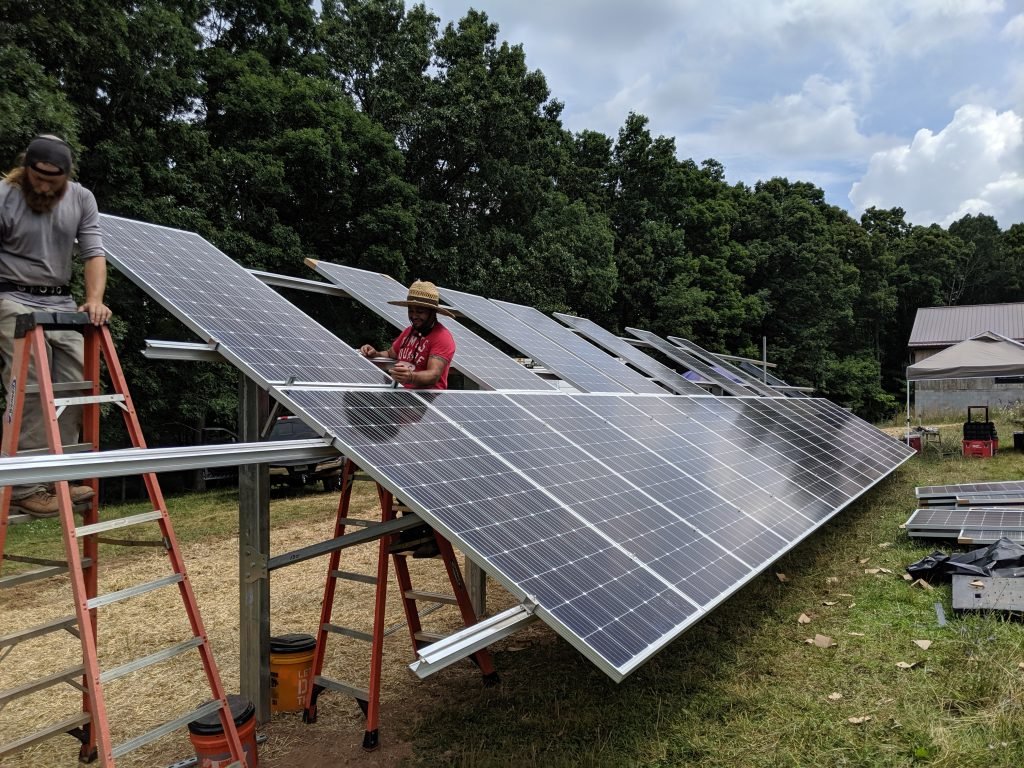
Again, if you are investing a lot into this project it makes no sense to cheap out on things like labor. You could even hire someone to help you who has worked on a roof before. You may even convince a friend to do it for free! Either way, get help from someone when you start putting everything together.
When Buying a DIY Solar Kit Makes Sense
Buying a DIY solar kit only makes sense if you are building a very specific project. For example, you are trying to build an off-grid air conditioner setup. Another example is if you are putting solar on a small shed or RV where not much detail is needed. Another reason kits can be helpful is that they can show you the overall size and amount of system components you may need for a complete solar system. Many companies that sell these DIY solar kits just use them as a starting point and not as a final product.
So, you can look at one of the DIY solar kits and come up with a very good idea of what you may need to do. Let’s say for example you looked at a 6.8k DIY solar kit for your home. That would give you a good idea of your starting point. Then based on your daily sun hours and roof tilt you can make modifications to the kit and get everything you need. In the end, you could add a couple of thousand dollars more to the build cost, but you had a good starting point.
If you were to build with one of the PV Direct systems we recommend, like the solar air conditioner or PV direct hot water kit you could buy a kit that is much easier for a beginner to tackle. These DIY solar kits are not designed to simply sell back to the grid. They are designed to make power and let the appliances run directly on it. Therefore, they are much cheaper.
Start your Project with Confidence
If you feel confident enough to start your solar option then follow these steps.
- Pick a solar kit as a starting point for your build
- Get expert help to design the final system
- Order the system
- Build the system (get someone to help you)
- Contact an electrician or your system designer to help you with permits
- Commission the system.
- Start making your own power!
There are a lot of options for building a solar system. You can do grid-tie, off-grid, or even hybrid battery backup. Once you’ve chosen the overall direction you want to go, speak to an expert who will help you make the right choices in your system design. The fun part is putting it together. The even more fun part is watching your power bill go down or go to zero. The main thing is to view the DIY solar kit as a starting point and not a final project.
You may even decide to purchase a system that utilizes PV Direct solutions. These types of solar arrangements don’t even have to have a battery or the grid to be powered on. You can “make hay while the sun is shining” and have a backup if there is a power outage. These types of setups don’t typically “sell back” to the grid, but they also don’t need to. Why would you sell your power when you can use it when you need it and lower your bill? But that’s a different topic.